
导演:
主演:
上映:
未知
更新:
2024-02-24 21:28:36,最后更新于
2年前
备注:
HD中字
评价:


TAG:
未知
剧情:
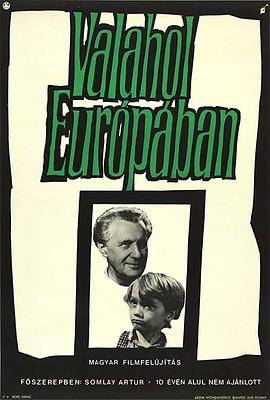
Somewhere in the remote region, the war ends. In the midst of ruined cities and houses in the streets, in rural hamlets, everywhere where people still live, are children who have lost their homes and parents. Abandoned, hungry, and in rags, defenseless and humiliated, they wander through the world. Hunger drives them. Little streams of orphans merge into a river which rushes forward and submerges everything in its path. The children do not know any feeling; they know only the world of their enemies. They fight, steal, struggle for a mouthful of food, and violence is merely a means to get it. A gang led by Cahoun finds a refuge in an abandoned castle and encounters an old composer who has voluntarily retired into solitude from a world of hatred, treason, and crime. How can they find a common ground, how can they become mutual friends? The castle becomes their hiding place but possibly it will also be their first home which they may organize and must defend. But even for this, the price will be very high. To this simple story, the journalist, writer, poet, scriptwriter, movie director, and film theoretician Béla Balázs applied many years of experience. He and the director Géza Radványi created a work which opened a new postwar chapter in Hungarian film. Surprisingly, this film has not lost any of its impact over the years, especially on a profound philosophical level. That is to say, it is not merely a movie about war; it is not important in what location and in what period of time it takes place. It is a story outside of time about the joyless fate of children who pay dearly for the cruel war games of adults. At the time it was premiered, the movie was enthusiastically received by the critics. The main roles were taken by streetwise boys of a children's group who created their roles improvisationally in close contact with a few professional actors, and in the children's acting their own fresh experience of war's turmoil appears to be reflected. At the same time, their performance fits admirably into the mosaic of a very complex movie language. Balázs's influence revealed itself, above all, in the introductory sequences: an air raid on an amusement park, seen in a montage of dramatic situations evoking the last spasms of war, where, undoubtedly, we discern the influence of classical Soviet cinematography. Shooting, the boy's escape, the locomotive's wheels, the shadows of soldiers with submachine guns, the sound of a whistle—the images are linked together in abrupt sequences in which varying shots and expressive sharp sounds are emphasized. A perfectly planned screenplay avoided all elements of sentimentality, time-worn stereotypes of wronged children, romanticism and cheap simplification. The authors succeeded in bridging the perilous dramatic abyss of the metamorphosis of a children's community. Their telling of the story (the scene of pillaging, the assault on the castle, etc) independently introduced some neorealist elements which, at that time, were being propagated in Italy by De Sica, Rossellini, and other film artists. The rebukes of contemporary critics, who called attention to "formalism for its own sake" have been forgotten. The masterly art of cameraman Barnabás Hegyi gives vitality to the poetic images. His angle shots of the children, his composition of scenes in the castle interior, are a living document of the times, and underline the atmosphere and the characters of the protagonists. The success of the picture was also enhanced by the musical art of composer Dénes Buday who, in tense situations, inserted the theme of the Marseilaise into the movie's structure, as a motive of community unification, as an expression of friendship and the possibility of understanding. Valahol Europaban is the first significant postwar Hungarian film. It originated in a relaxed atmosphere, replete with joy and euphoria, and it includes these elements in order to demonstrate the strength of humanism, tolerance, and friendship. It represents a general condemnation of war anywhere in the world, in any form.
收起
相关影片

2026
剧情片
印度
兰维尔·辛格 阿克夏耶·坎纳 桑杰·达特 阿俊·拉姆鲍 马达范 莎拉·阿尔琼 Rakesh Bedi Danish Pandor Saumya Tandon 高拉夫·杰拉 Manav Gohil Naveen Kaushik 阿卡什·库拉纳 K Anshuman Thakur Vikash Rai
Hamza Ali Mazari, whose real identity is Jaskirat Singh Rangi, pursues his undercover operatio
TC中字

2026
剧情片
韩国
更新至第01集

2026
剧情片
日本
HD中字
2025
剧情片
大陆
HD国语
2026
剧情片
大陆
HD国语

2026
剧情片
英国
TC中字

2026
剧情片
英国
已完结

2025
剧情片
西班牙
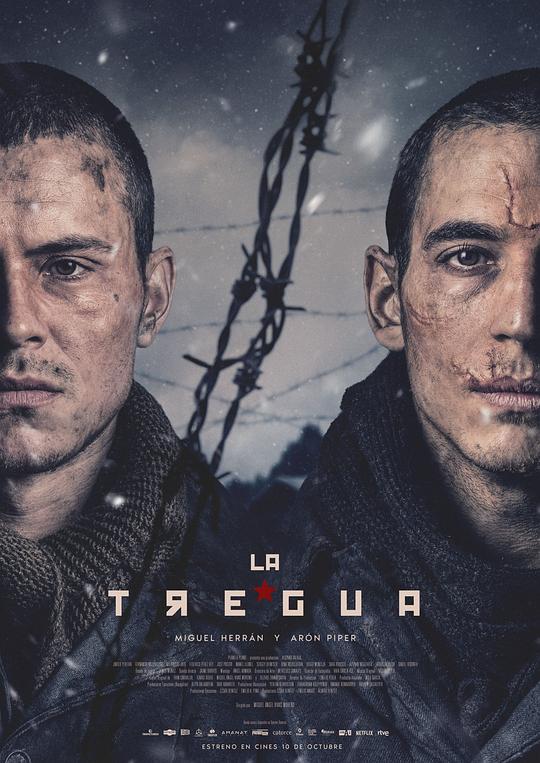
米盖尔·赫尔南 阿隆·陂佩 哈维尔·佩雷伊拉 费尔南多·瓦尔迪维尔索 Alejandro Jato Federico Pérez Rey 何塞·帕斯塔 Manel Llunell Sergey Ufimtzev 金娜·塔斯布拉托娃 Diego Montejo Sara Robisco Altynai Nogherbek Farabi Akkozov 丹尼尔·霍瓦斯 克里斯蒂安·斯塔姆 Peter Nikolas Manuel Cordero Vladimir Dimitrov 比森特·贝尔加拉
这部影片改编自真实事件,主演米格尔·埃尔南(Miguel Herrán)和阿隆·陂佩(Arón Piper)分别饰演雷耶斯(Reyes)和萨尔加多(Salgado),两名在西班牙内战中曾站
HD中字
2025
剧情片
越南
HD中字

2025
剧情片
大陆
HD中字

2026
剧情片
大陆
HD国语
2025
剧情片
奥地利 / 德国 / 瑞士
玛丽·洛伊恩贝格尔 克拉斯·邦 朱莉娅·弗兰茨·里克特 汉斯·鲁 卡罗琳·弗兰克 Judith Altenberger Andreas Ortner 妮娜·弗格 Nairi Hadodo Selina Ströbele Tchuci
40岁的朱莉娅是一位事业有成的指挥家,她与伴侣格奥尔格一直渴望拥有自己的孩子。就在此时,维尔福特医生的出现为他们带来了希望。经过这位生育医生的成功治疗后,朱莉娅如愿以偿地怀孕了。
然而分娩
HD中字
2025
剧情片
印度尼西亚
Aqilla and Yumna, two mothers who both fought for Baskara's love and happiness. Aqilla gav
HD中字
2026
剧情片
阿根廷
A former communist activist and a laid-back man who embraces a "live and let live" p
HD中字
2026
剧情片
英国
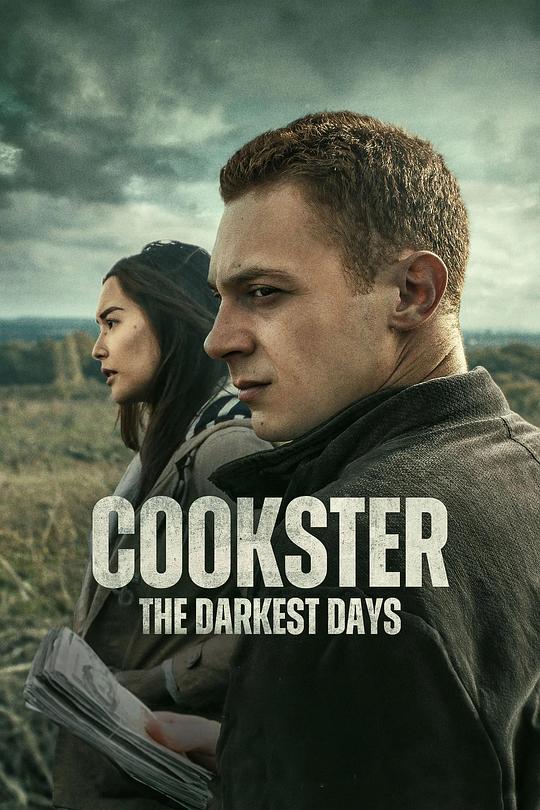
Cookster: The Darkest Days
简介A dyslexic teen misunderstood by his family and desperate for res
HD中字